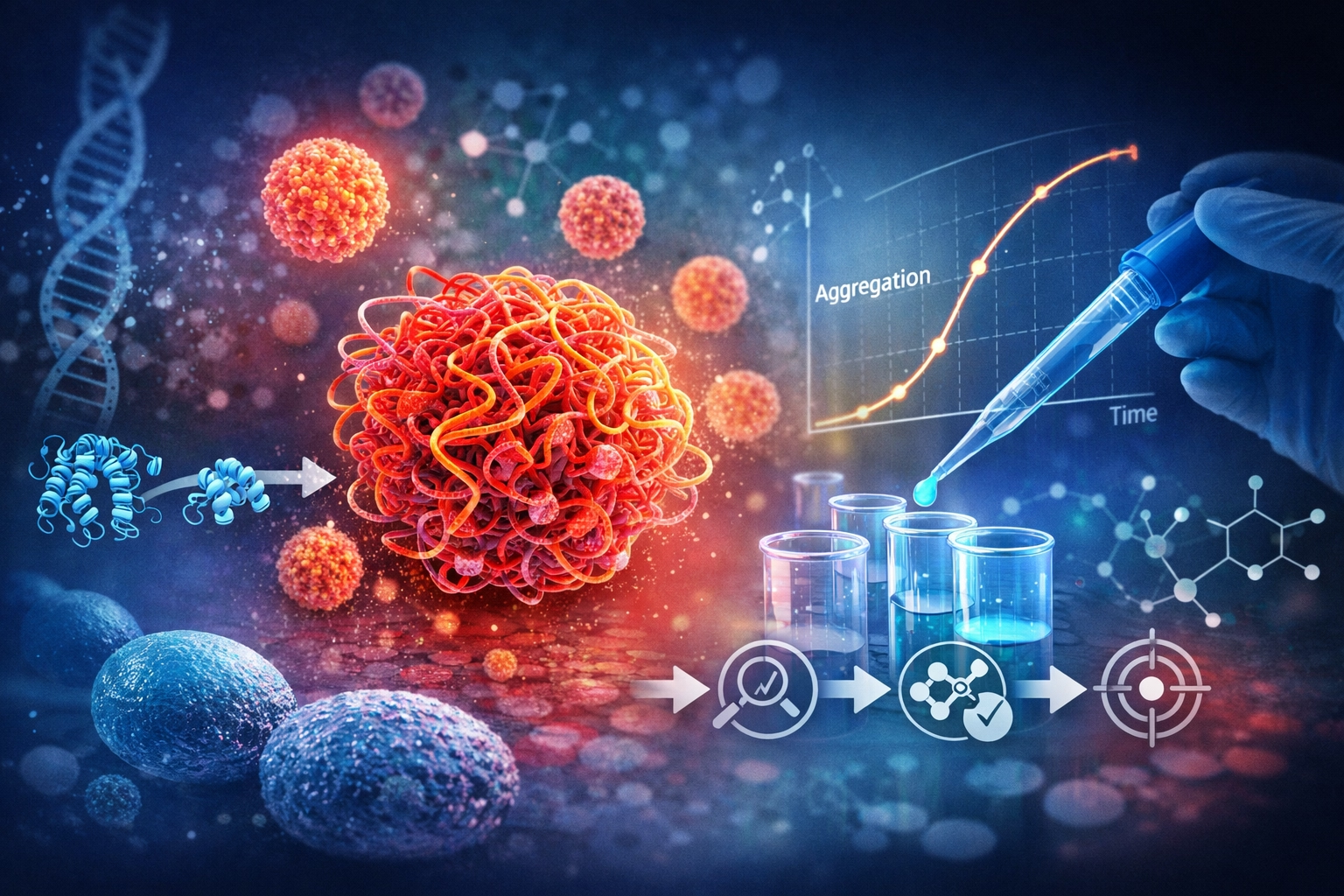
Long-Read Molecular Classification of Pediatric CNS Tumors
An international pediatric neuro-oncology project combining long-read sequencing, molecular profiling, AI-supported classification, and a pilot liquid-biopsy pathway using cerebrospinal fluid.
Project Overview
Pediatric central nervous system tumors remain among the most difficult childhood cancers to diagnose and classify accurately. Tumors that appear similar under conventional pathology can belong to very different molecular subtypes, with different prognoses and different responses to treatment. In diagnostically difficult cases, morphology, molecular testing, and the clinical picture may not provide a clear or consistent answer. This project is being developed by OncoHelper AI together with an established international clinical and research partner. The project will evaluate whether long-read sequencing combined with genomic, epigenetic, and computational analysis can improve molecular classification of diagnostically challenging pediatric CNS tumors and create a practical pathway toward less invasive molecular assessment using cerebrospinal fluid.
Clinical Problem
Current molecular diagnostic approaches rely heavily on tissue analysis, short-read sequencing, and methylation arrays. These methods are highly valuable, but difficult cases remain. Complex structural rearrangements, copy-number changes, epigenetic signals, and other clinically relevant molecular events may not always be fully resolved within a single diagnostic workflow. Repeat tissue biopsy can also be difficult or unsafe, particularly when clinicians need to investigate recurrence, treatment-related changes, or molecular evolution over time. The project therefore focuses on two connected clinical questions: 1. Can integrated long-read molecular profiling improve classification of diagnostically difficult pediatric CNS tumors? 2. Can tumor-derived molecular information from cerebrospinal fluid provide a useful complementary pathway when repeat tissue sampling is difficult?
Scientific Concept
The study is built around long-read sequencing as a unified molecular platform. The proposed analytical framework combines: - somatic variants - structural rearrangements - copy-number alterations - native methylation signals - established methylation reference data - computational and AI-supported classification. The initial study will compare this integrated approach with established molecular classification methods and evaluate its added diagnostic value in difficult or discordant cases. A separate pilot arm will examine paired tumor-tissue and cerebrospinal-fluid samples.
Existing Project Readiness
The project is based on an existing clinical and scientific foundation. Available or planned resources include: - an established pediatric CNS tumor clinical cohort - archived and prospectively collected tumor material - existing molecular and methylation data - access to diagnostically difficult and discordant cases - experience in pediatric CNS tumor molecular classification - bioinformatics and computational infrastructure - an initial pathway for paired tumor-tissue and cerebrospinal-fluid analysis - access to large public molecular reference datasets for model development and comparison. The broader research program anticipates a cohort of at least 120 pediatric patients, while the first international pilot will use a smaller, focused cohort designed around clearly defined diagnostic questions.
Proposed First International Study
The initial international study should remain focused and independently testable. The proposed first stage includes: - a selected cohort of diagnostically challenging pediatric CNS tumors - long-read sequencing of tumor tissue - integrated genomic and methylation analysis - development of a preliminary molecular classifier - comparison with established diagnostic approaches - independent validation - a limited paired tissue-CSF pilot. The first stage is intended to generate a clear proof of clinical and analytical value before expansion into a larger international program.
Proposed U.S. Research Contribution
OncoHelper AI is seeking a U.S. research partner able to provide a complementary scientific block rather than duplicate the existing work. Potential areas of contribution include: - independent molecular or computational validation - comparison with established U.S. molecular-classification pipelines - access to an independent pediatric CNS tumor cohort - advanced bioinformatics and machine-learning analysis - methodological development for long-read classification - CSF liquid-biopsy analysis - neuropathology review - statistical validation and study design - joint development of clinically interpretable outputs. The exact U.S. research work package will be defined jointly with the participating institution.
Why an International Study
The value of the project is strengthened by independent research performed in different clinical and scientific environments. A common protocol applied to separate patient cohorts can determine whether the molecular approach is reproducible across institutions rather than effective only within a single center. The international design also allows the project to combine complementary expertise in clinical neuro-oncology, molecular diagnostics, long-read sequencing, computational analysis, and independent validation. The objective is a genuinely integrated research program in which each participating group contributes a distinct scientific component and the results are evaluated together.
Expected First-Stage Outcomes
The first stage is expected to produce: - a validated analytical workflow for long-read molecular profiling of pediatric CNS tumors - a working prototype molecular classifier - quantitative comparison with established diagnostic methods - evidence of added value in diagnostically difficult cases - initial data on paired tumor-tissue and CSF molecular classification - a defined framework for a larger multicenter validation study.
Potential Long-Term Development
A successful first stage could support expansion into: - larger multicenter cohorts - broader CSF-based molecular monitoring - longitudinal assessment of recurrence and treatment response - additional tumor classes - international reference datasets - clinician-facing molecular decision-support tools - a scalable international pediatric neuro-oncology research platform.
Current Status
The scientific concept and initial study framework are established. The clinical and research foundation for the project is available, including patient cohorts, molecular data, laboratory capability, computational resources, and relevant scientific experience. The next step is to establish a complementary U.S. research partnership and jointly define the international study protocol, independent research blocks, validation framework, and subsequent funding strategy.
Join the Project
OncoHelper AI invites U.S. academic medical centers, pediatric neuro-oncology programs, molecular pathology laboratories, sequencing groups, and computational research teams to discuss participation in this international project. We are particularly interested in partners who can contribute an independent scientific component and help build a study in which participating research groups generate complementary results under a common protocol. At this stage, the purpose is to establish scientific fit and define the strongest possible international research structure.